

is a paper to paperless modern role-playing game concept with open maps, fast leveling, and total creative control.
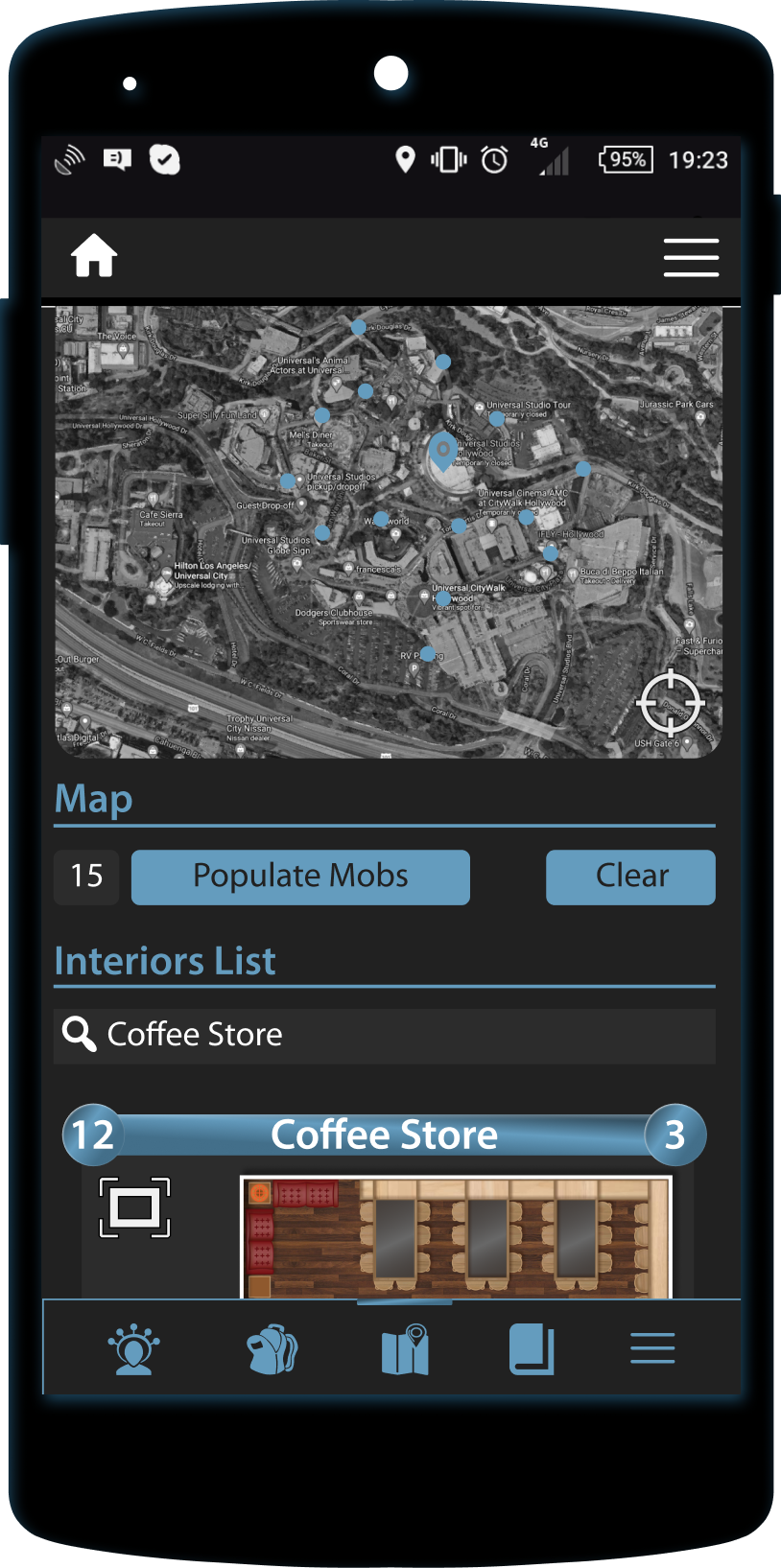
Open map with searchable interiors - allows players to start wherever they want in the world with interior maps to use as guides if they go inside.
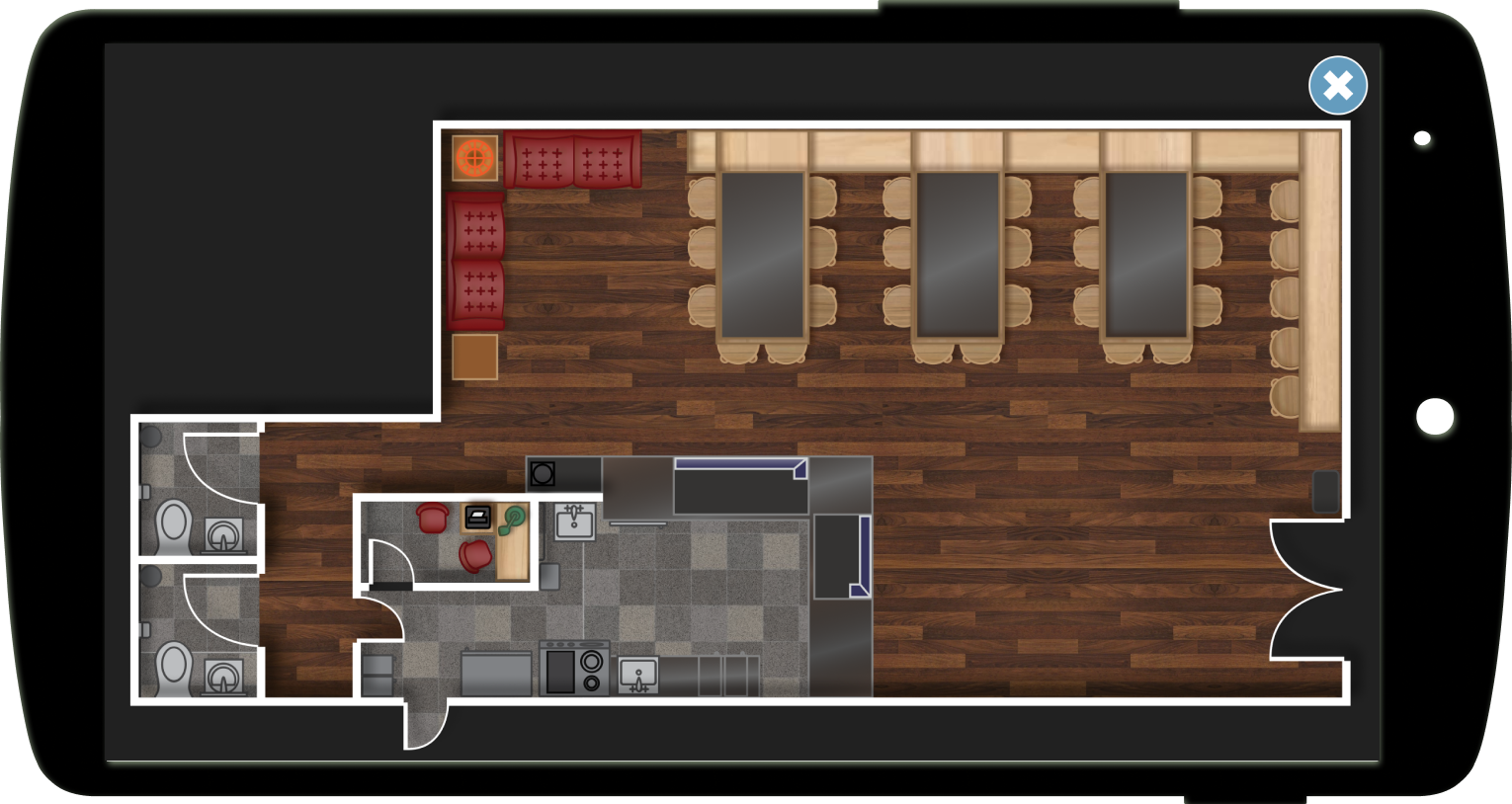
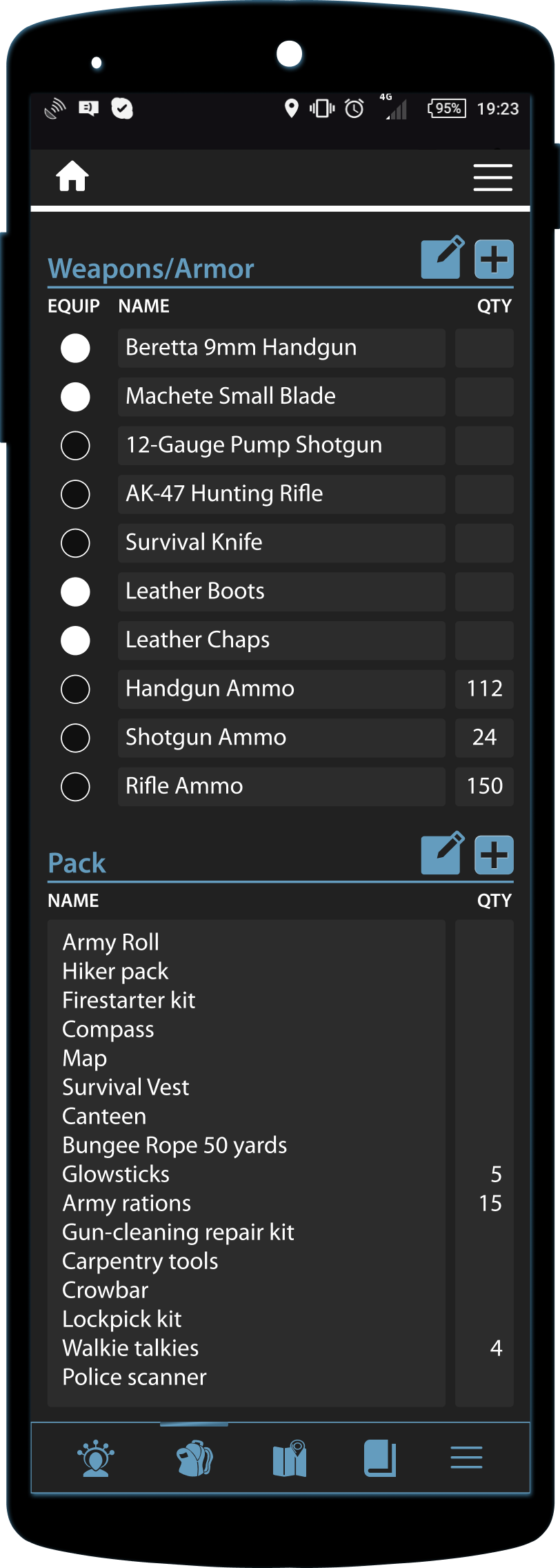
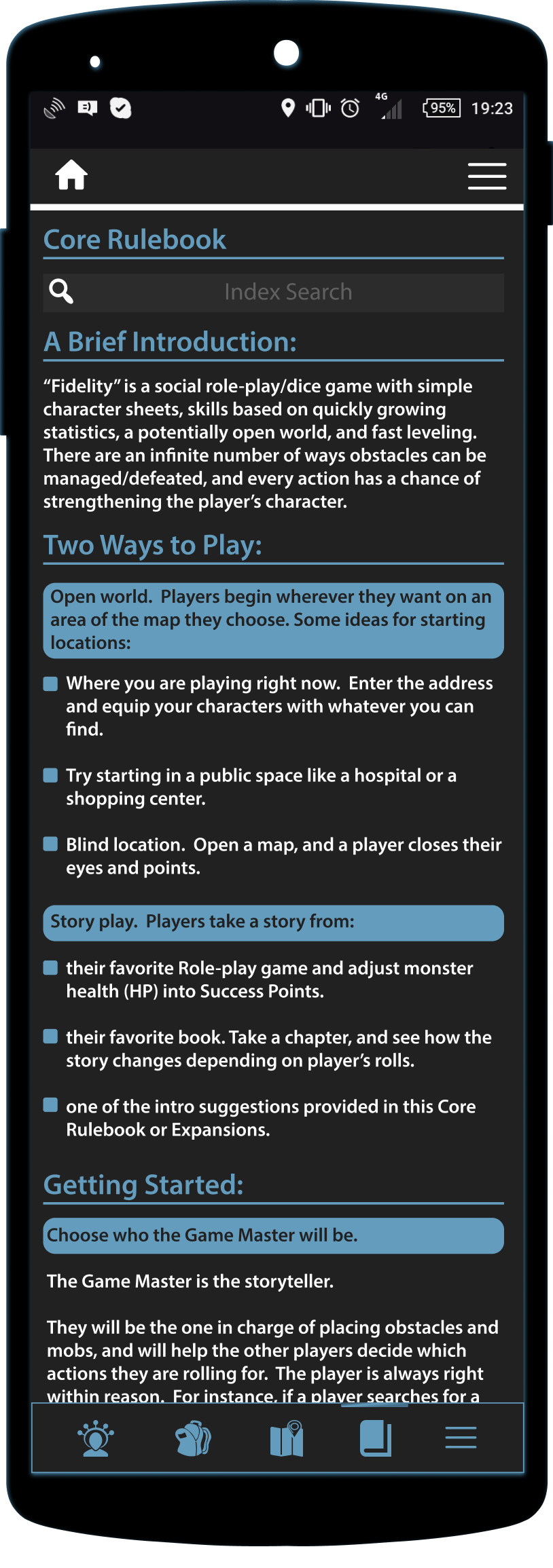
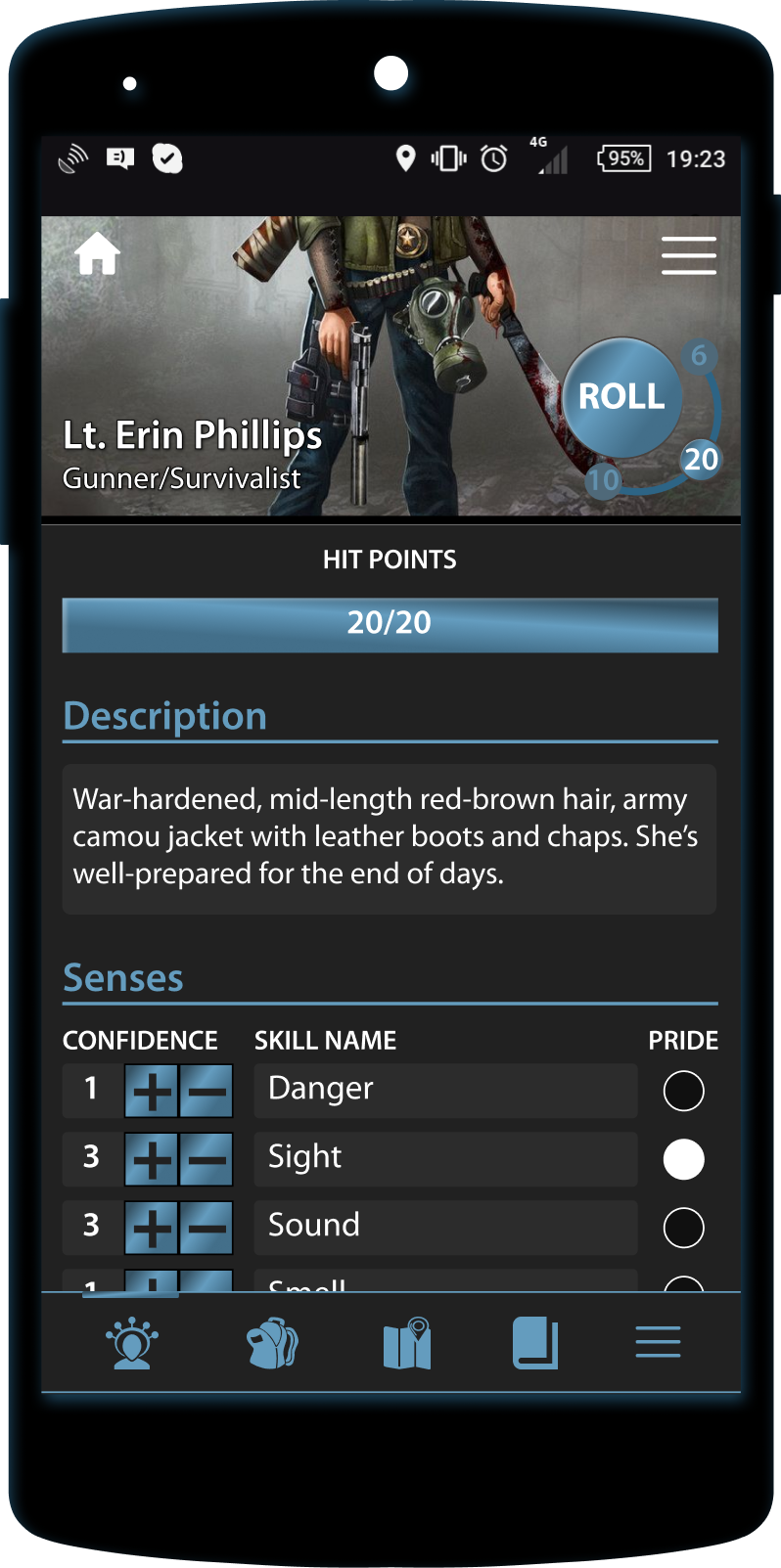
Mobile version of character sheet, map, fullsize interior, equipment, and core rulebook.
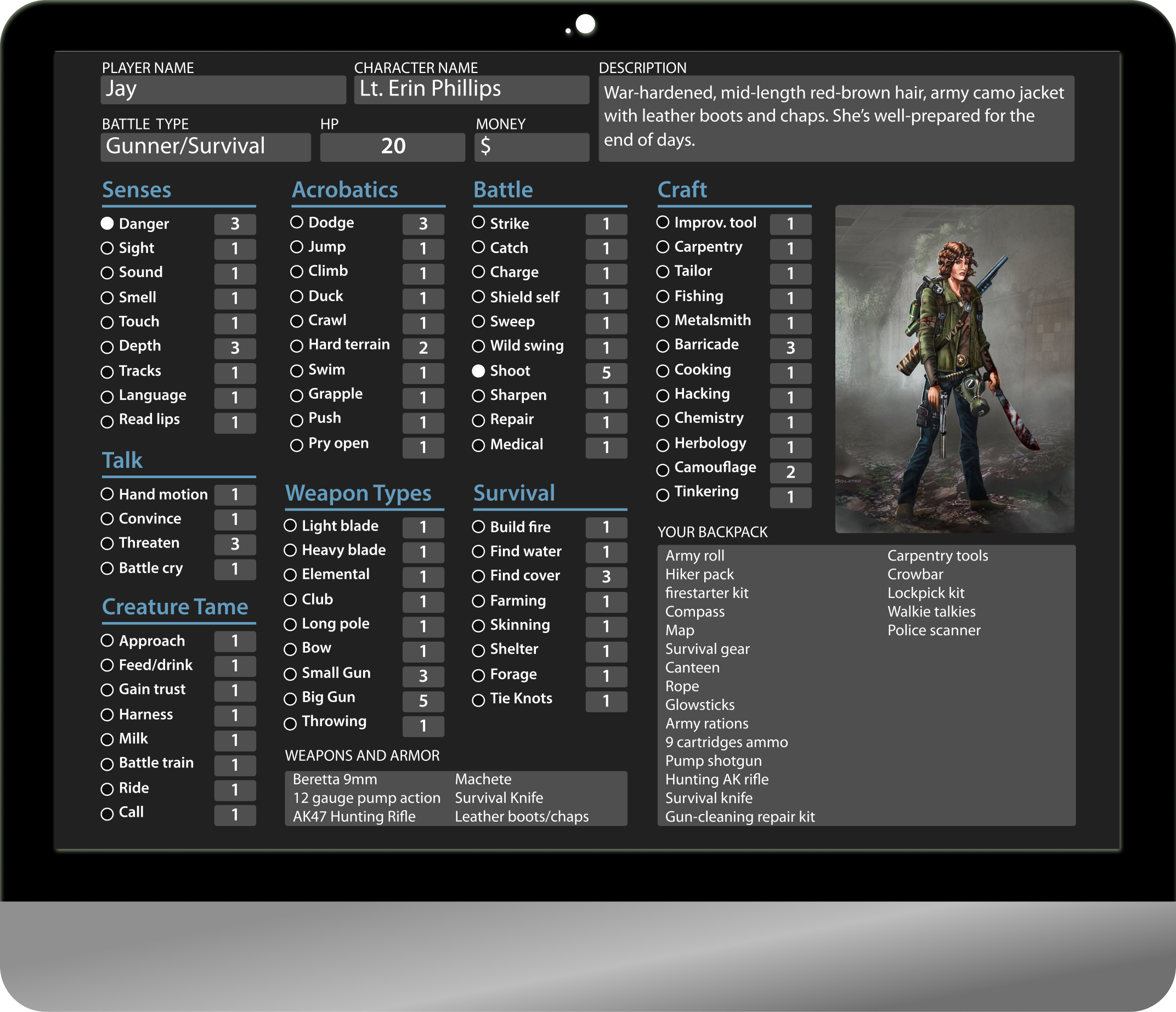
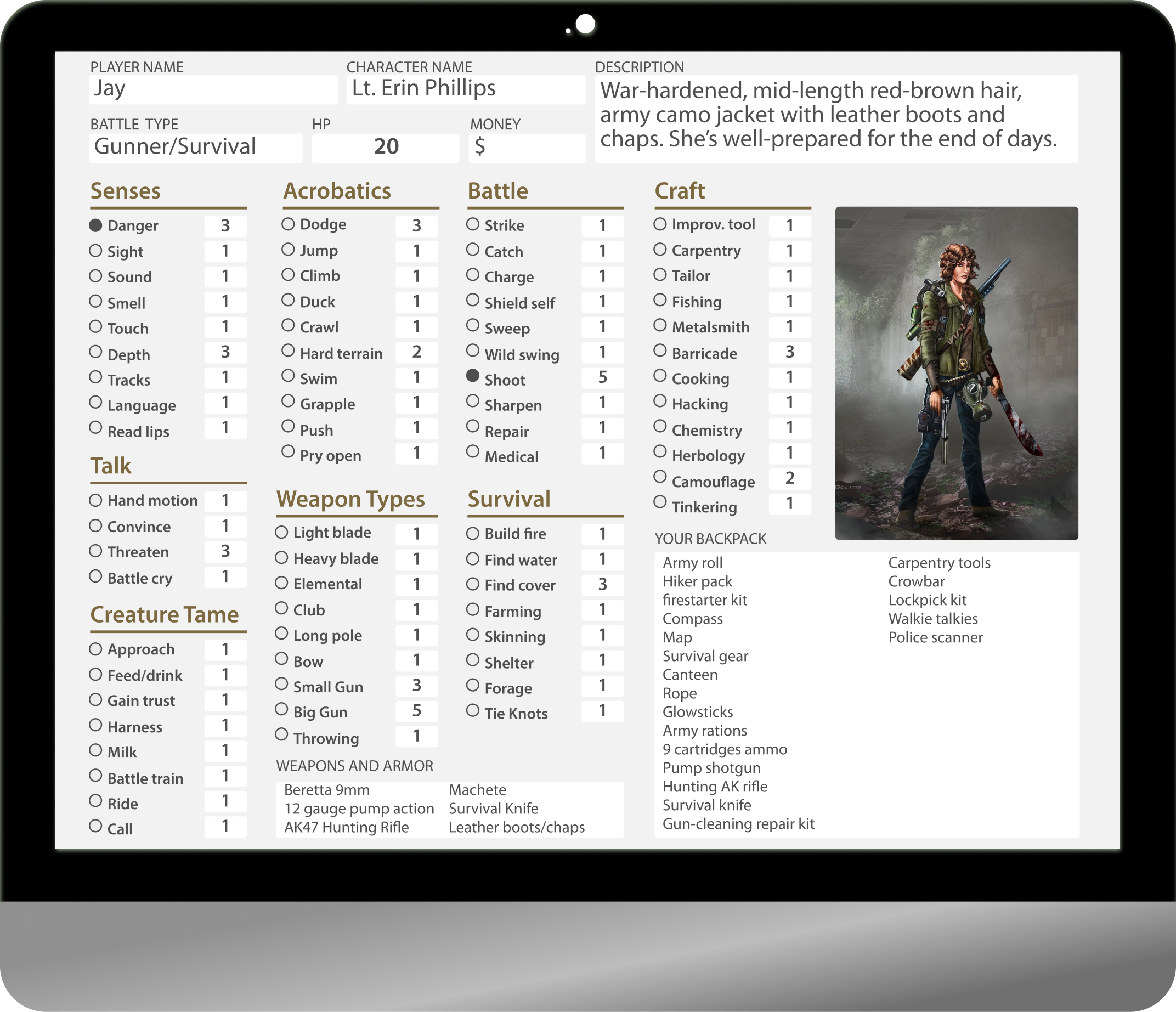
Desktop version of character sheet (above). It could also be a PDF with editable fields. Print version for paper tabletop (below). The lighter version is ideal to save printer ink.
Board games are, to many people, "bored" games. It's bordering on becoming a niche market.

Cover art courtesy of "Anesthetize" album by Porcupine Tree.
Technology has supported and moved with the shift of young interests, but the board and Role-play games need to play a bit of catch-up.
Easy board games (ie Monopoly, Clue) can take 5-10 minutes to set up and at least an hour to play through. Complicated board games (ie Risk, Pandemic) can take 20 minutes to set up, and average 2-3 hours to play.
Role playing games (ie Dungeons&Dragons, Starfinder) can take 4 hours just to build a character, and average 3-4 hours per game scenario. And after it all, there's no guarantee the character will gain enough experience to upgrade a skill or get better at something.

I love playing any board game any time.
I've been painting miniatures since Hero Quest in 1995.
I like losing a game as much as winning it.
I get together at least twice a month for RPGs with friends.
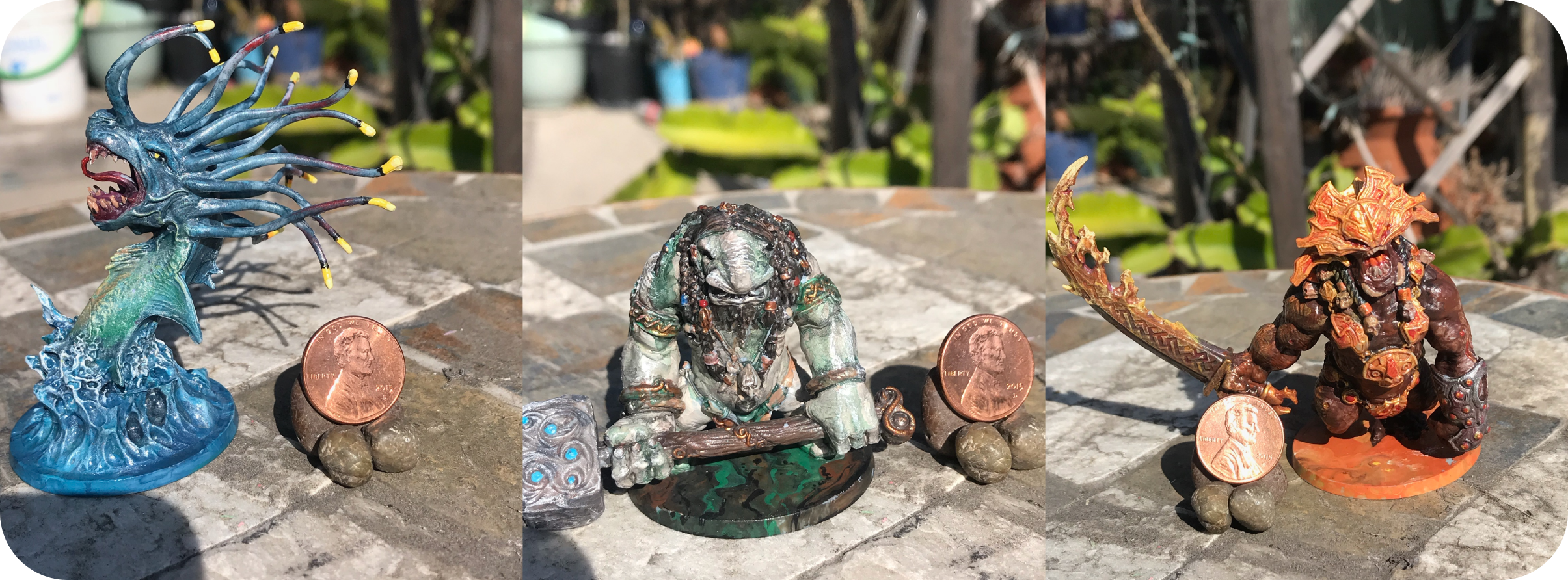
Miniatures from "blood rage" by Guillotine Games.
The goal of Fidelity is to create a game for Gen Z children and their families that will keep their interests and allow them to think creatively and strategically.
I began working on the concept in May of 2019, and fleshed out a core rulebook by end of that year. In October 2020 I started working on prototypes, interviews, and testing.
My project role was research, brainstorming, benchmarking, branding, style guide, UI design, interviews, wireframing, and testing the product. This was a personal startup project.
Project for this brief spanned from October - December 2020 averaging 3 hours/day, 4 days a week. Designs and research were built from the ground up. I was the only UX designer on this project.
For the logo I wanted to design something fantastical as an omage to Jim Henson, while supporting the theme of the game which is about faith and practice makes perfect.
I went with something that looked like a halo or crown with dots emphasizing how the skills and "Pride" element on the character sheets were.

Character sheet with streamlined skills every Role-playing game can use or adjust to. Print media and PDF with editable fields.
Core Rulebook with Game Set up, Game Types explained, Getting Started, and Character/GM Action Guides
Prototype templates made for Bestiary Guide, and Interior Locations Guide.
Bestiary List and Interior Locations List that will be added to Core Rulebook.
Game should go through at least 3 tests of each Game Type to see the flow and tweak the character sheet or rulebook accordingly.

Who are we building the project for?
Parents who struggle to get their children interested in board/role-play games.
In contrast, adults who want youth to unplug and use their creativity constructively.
Adults who like the idea of Role-playing games, but have replayability trouble.
Businesses who are willing to try RPGs as teamwork or morale-boosters.
How might we take the complication and drag of role-playing games (ie Dungeons&Dragons) and modernize them?
How might we cut the set up time for a game down to around 5 minutes?
How might we inspire regular role-players to want to continue playing?
How might we control the gameplay times to be short but satisfying?
How might we convert the product into a paperless gaming app?
I like to have a wireframe or flow by the interview phase of the project. It gives my participants a discussion point especially if they don’t fully understand what my goal is, and I’ve noticed it makes them feel my project is more legit.
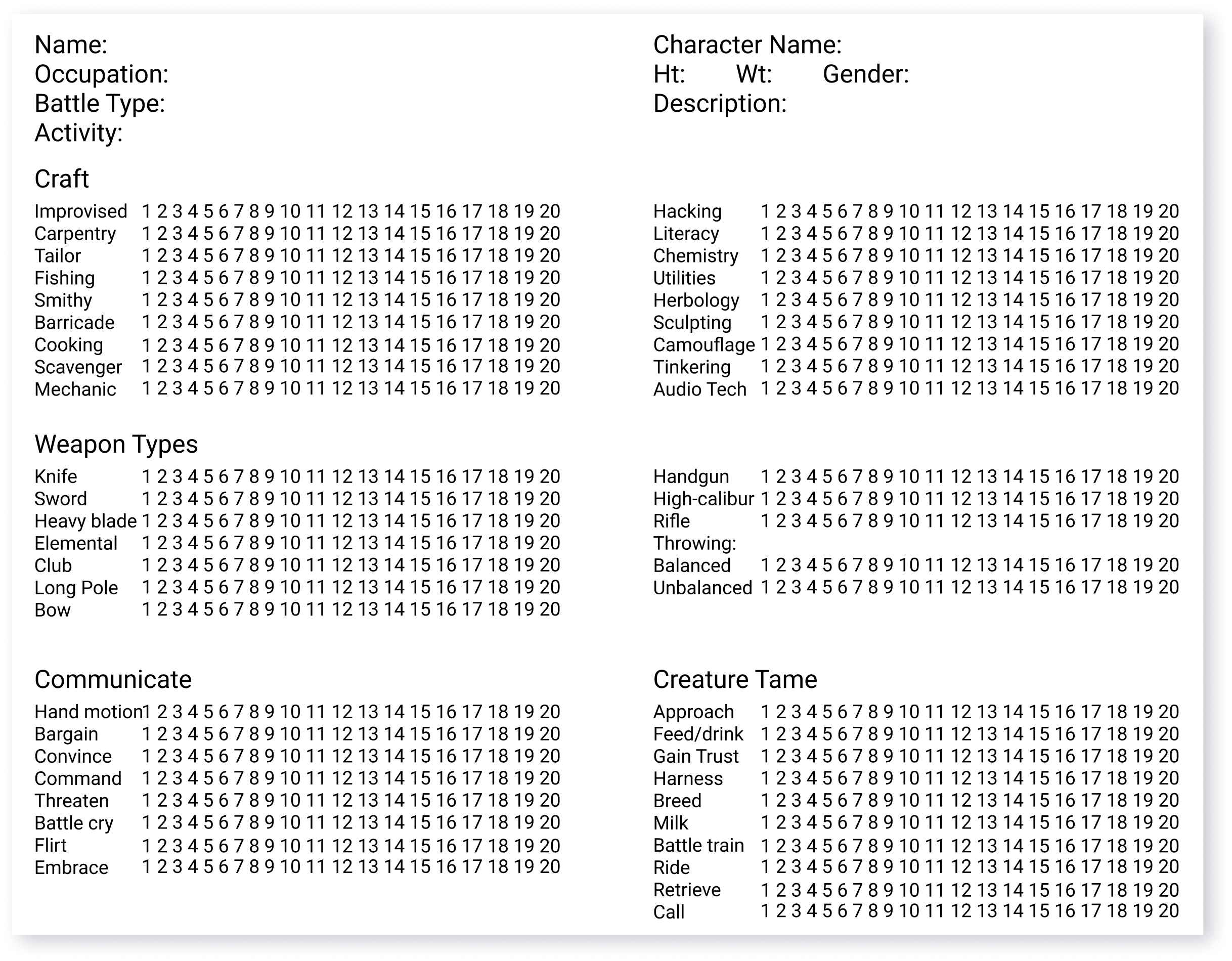
1.Initial skill sheet, where the values could be circled as the character progressed.
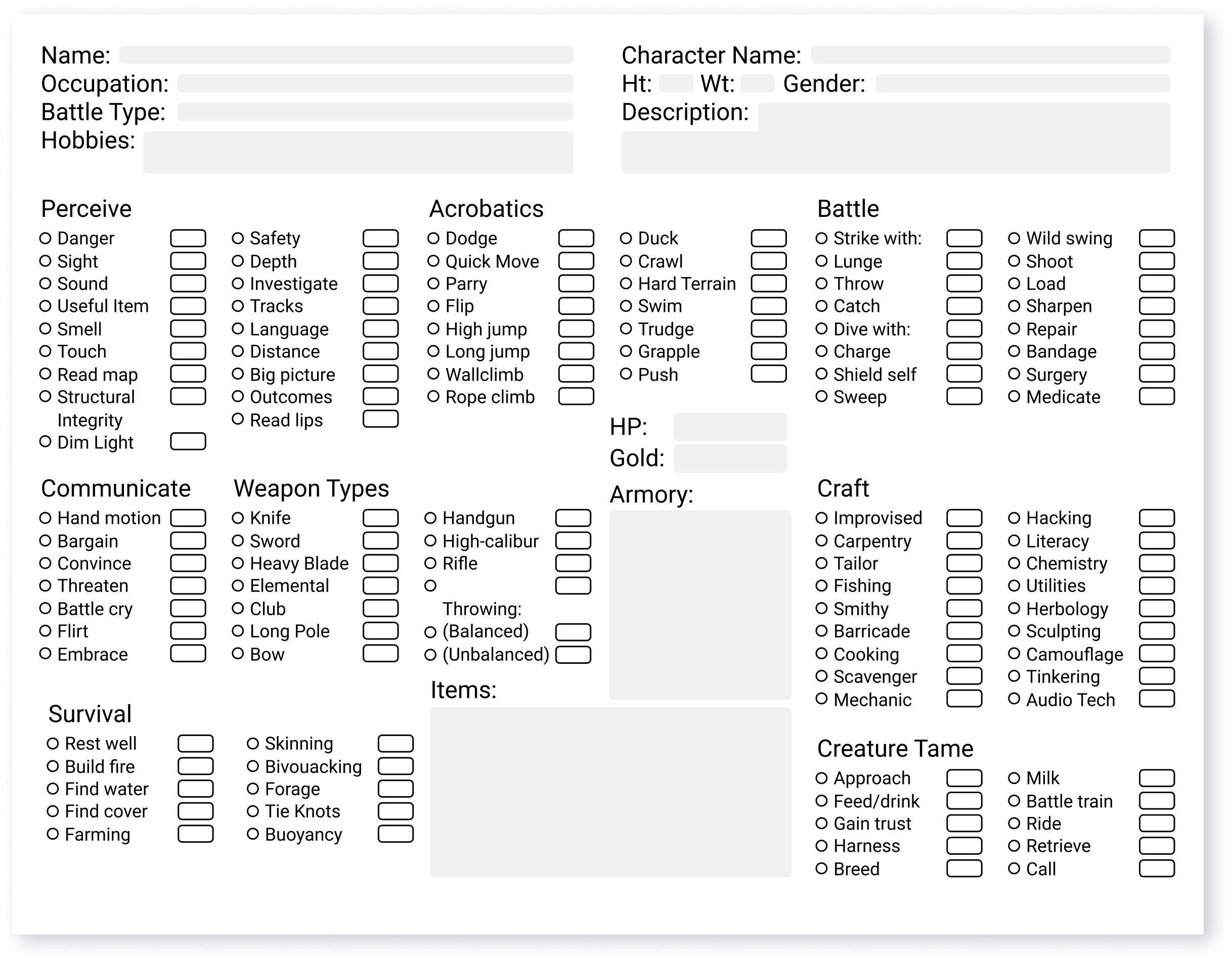
2.Draft layout with blank fields instead of prewritten skill values. Made room for equipment, character HP, and Currency. This draft is what interviews saw.
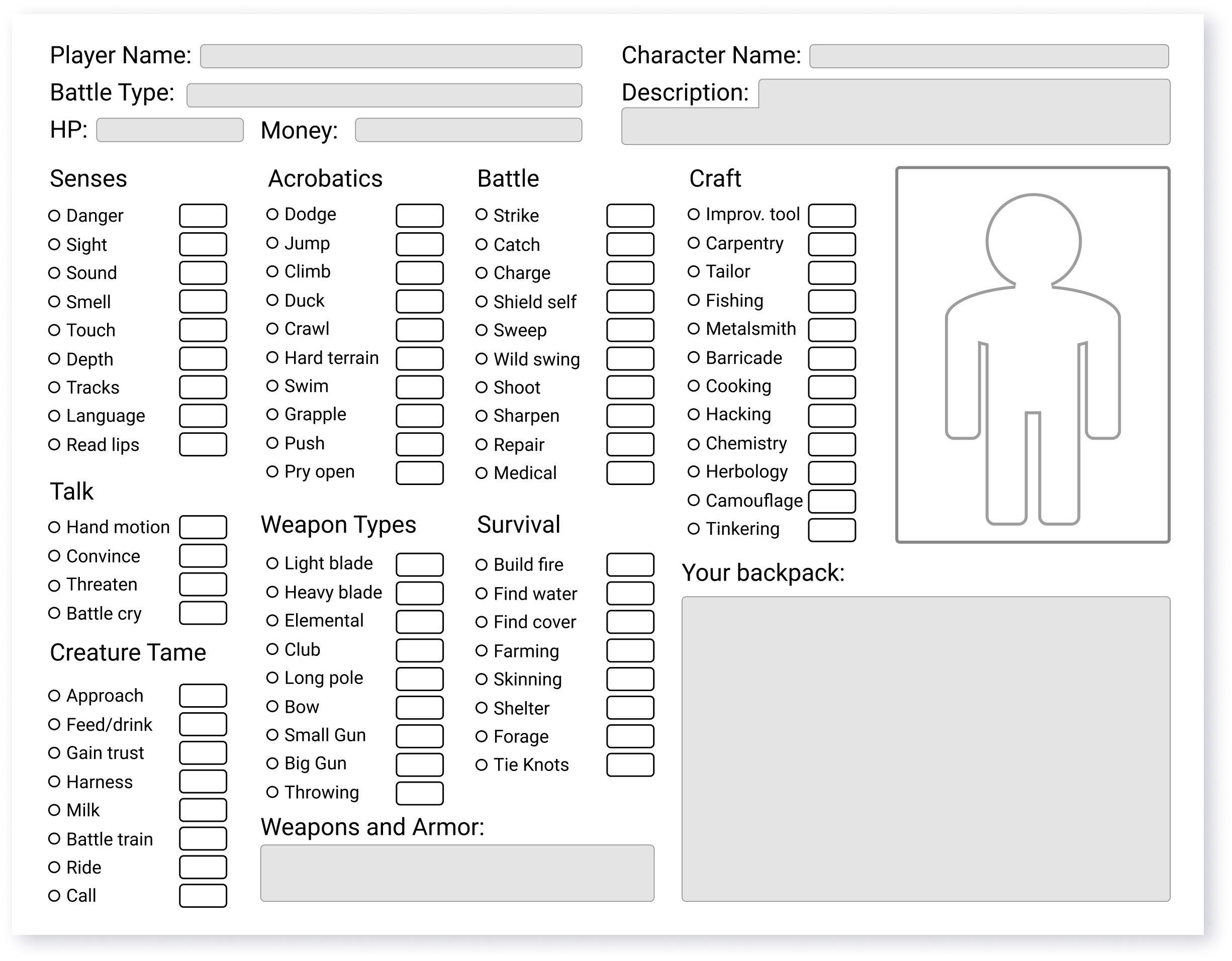
3. After research phase, some participants were very informative if what they would expect to see on a character sheet. Best advice I received was, "If there isn't a game mechanic related to the description, it's unnecessary." With this in mind height, weight, gender, and occupation were taken out.
I went through the previous character sheet, and noted redundant skills and was able to streamline the layout. It gave me room for an area where players could draw or paste a picture of their character.
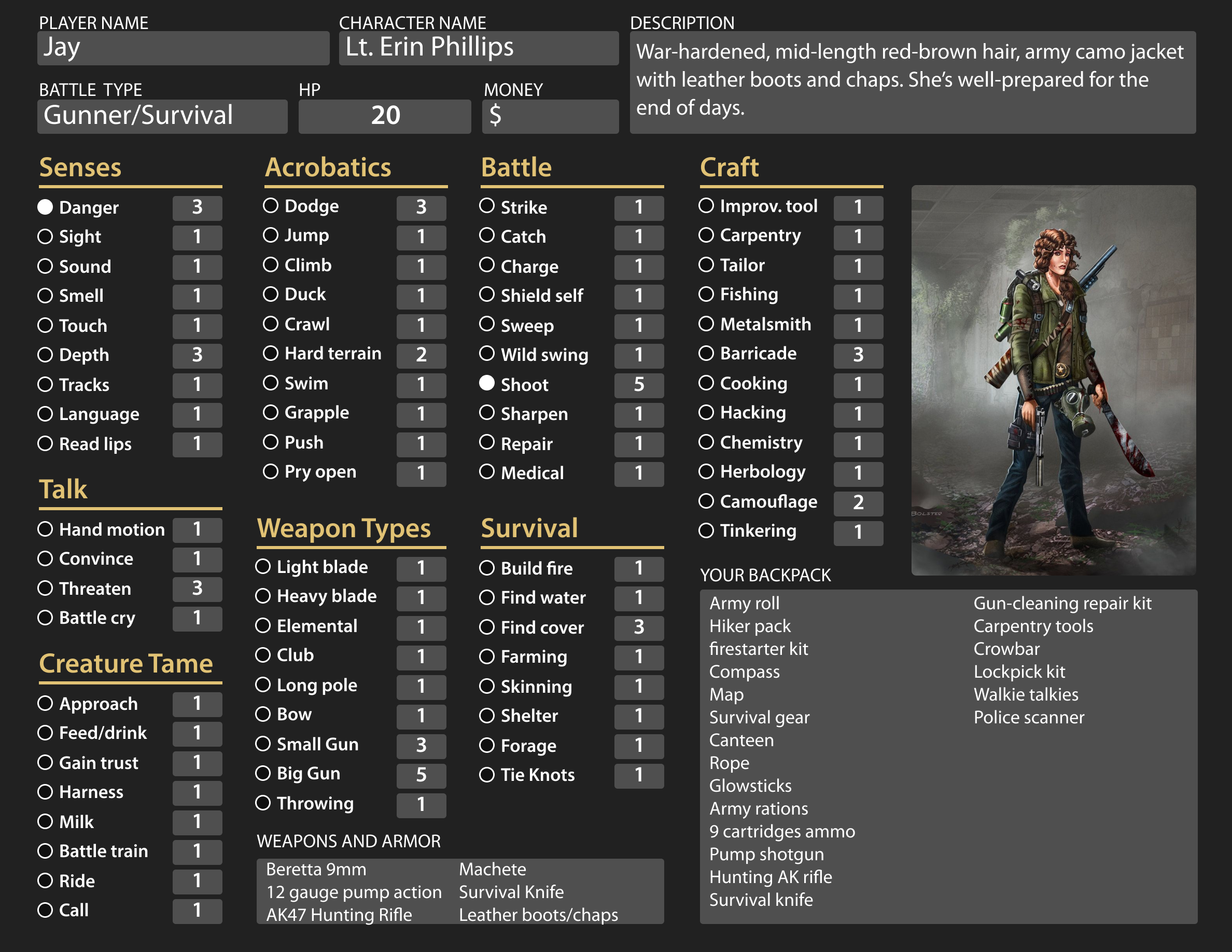
4. First round of ideation where colors and typefaces are considered, and tested for accessibility. This style began transferring over to the interior and monster play cards, until...
Testable mobile web flow for Character Sheet, Roll feature, Equipment pack, Map guide, and Rulebook
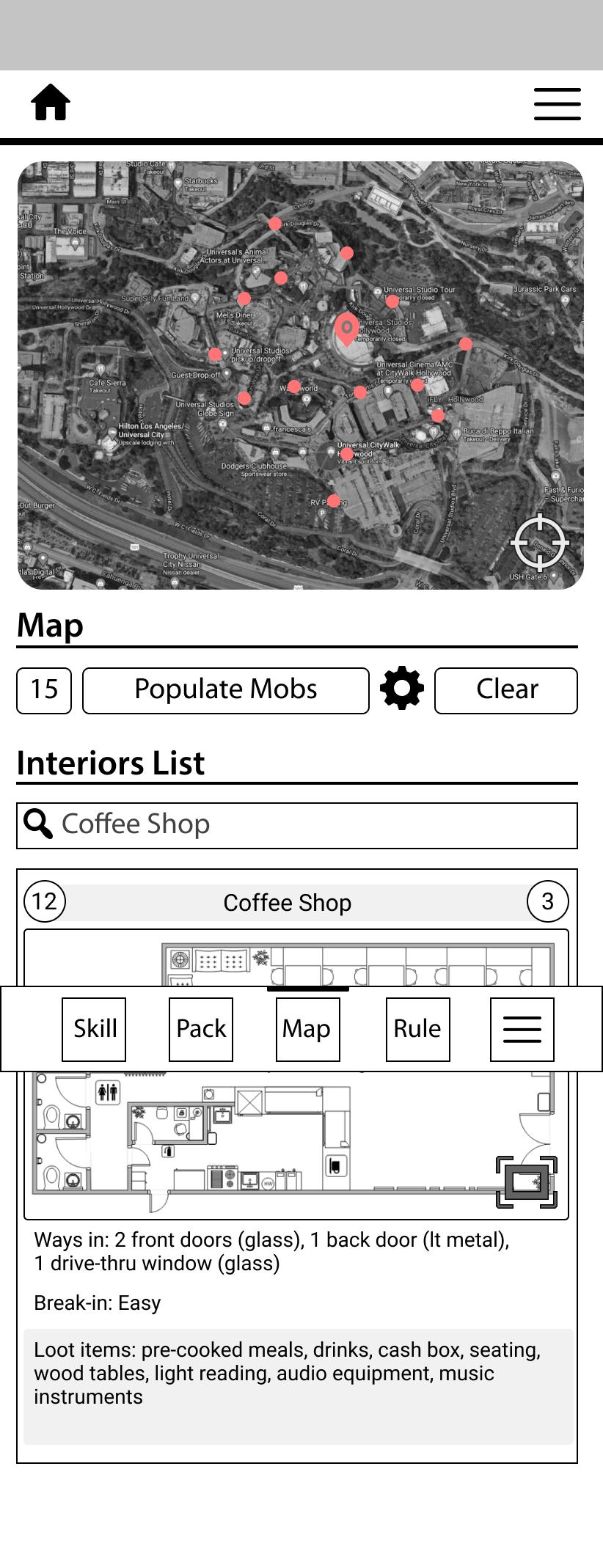
Map guide will have a way to randomize "obstacles" by calculating distance around hero's location and a number of dots to generate.
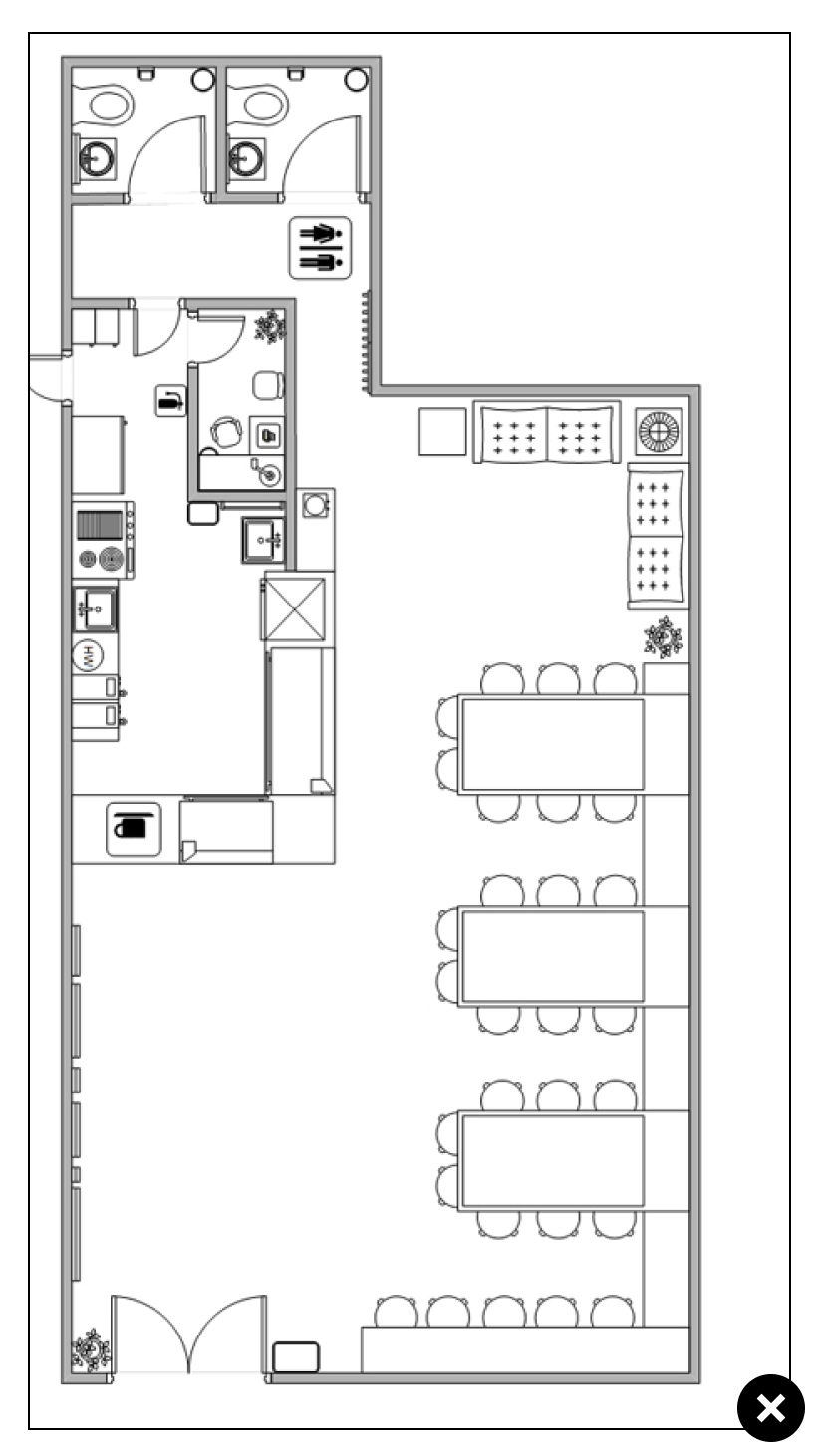
Interior list with an auto-fill search bar. Results show up in the list and after selected, the interior card can be viewed with statistics and a way to expand to full mobile screen view.
Stretch goals:
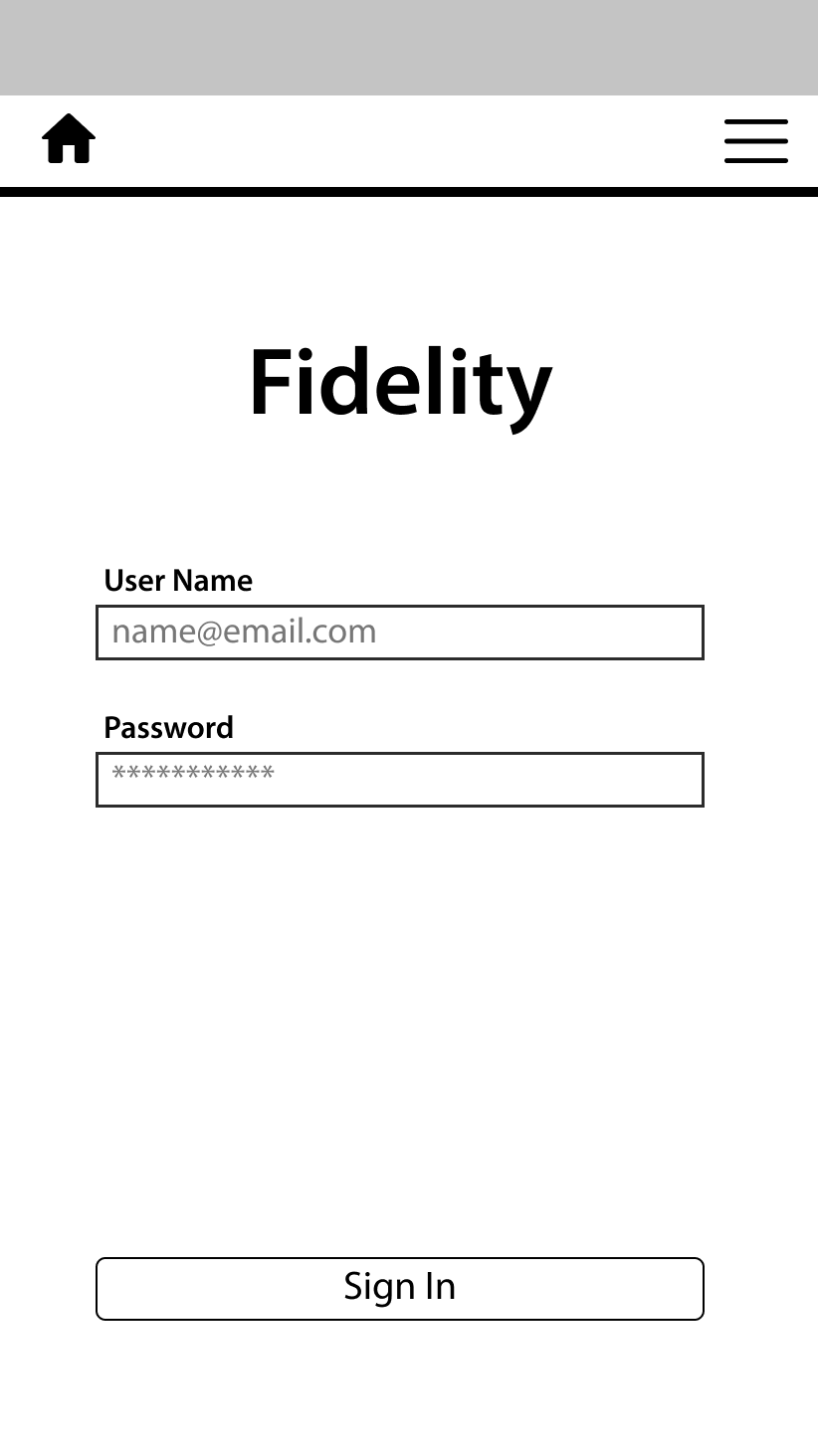
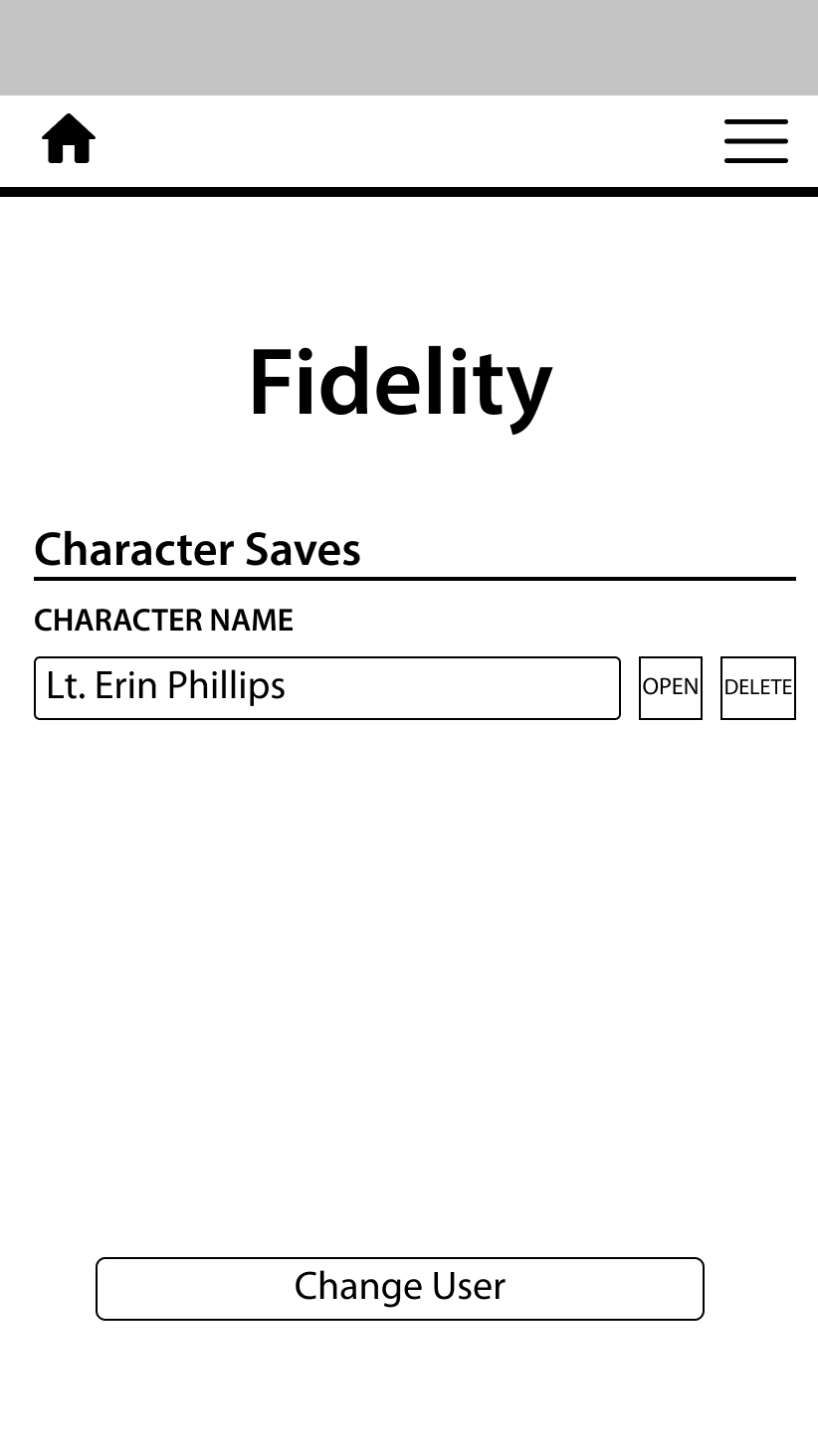
Sign-up flow and an area where character sheets can be saved.
Character sheets are organized in folders made by user for different game types.
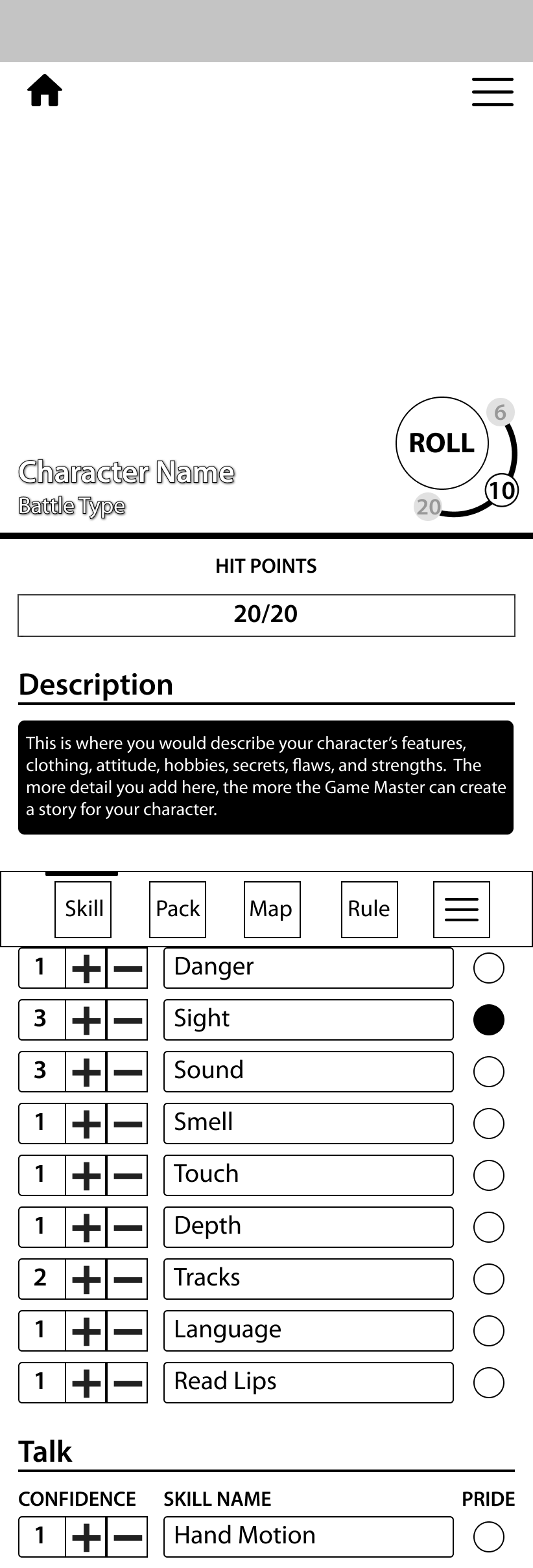
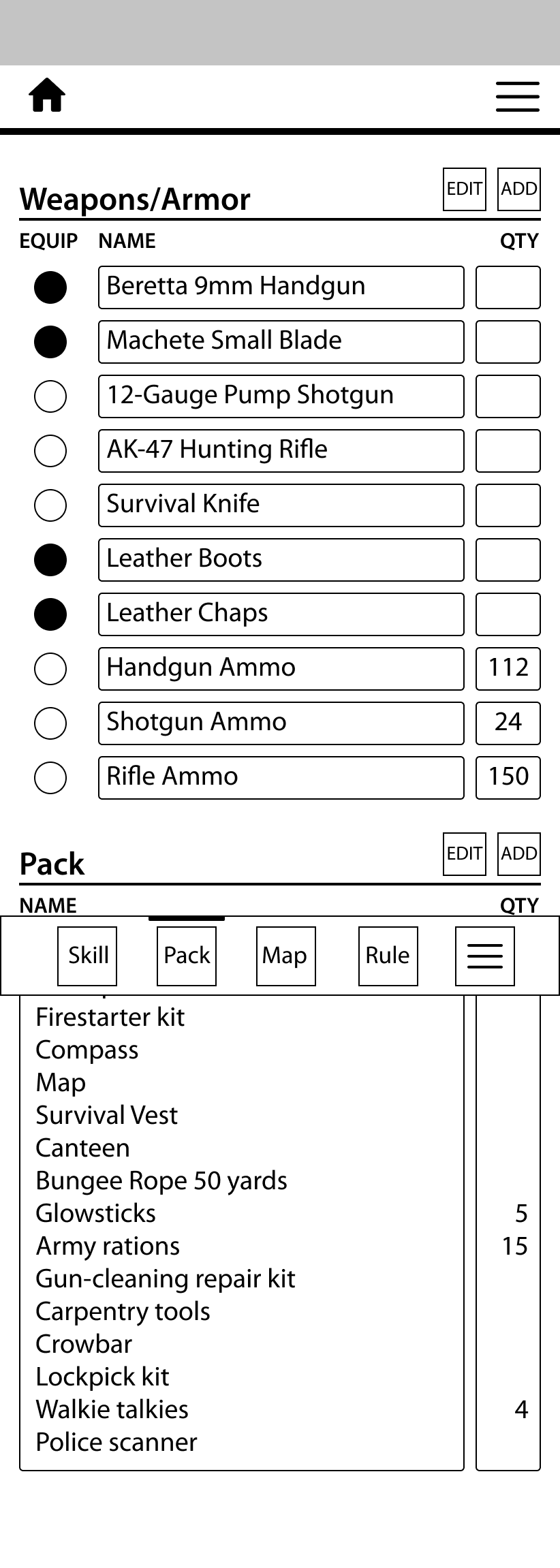
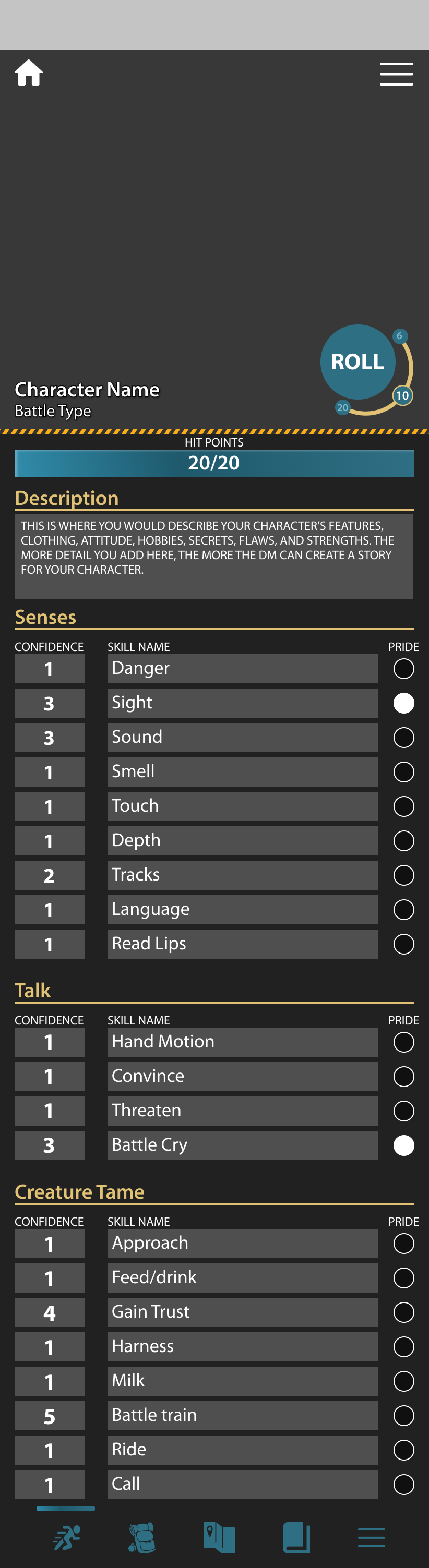
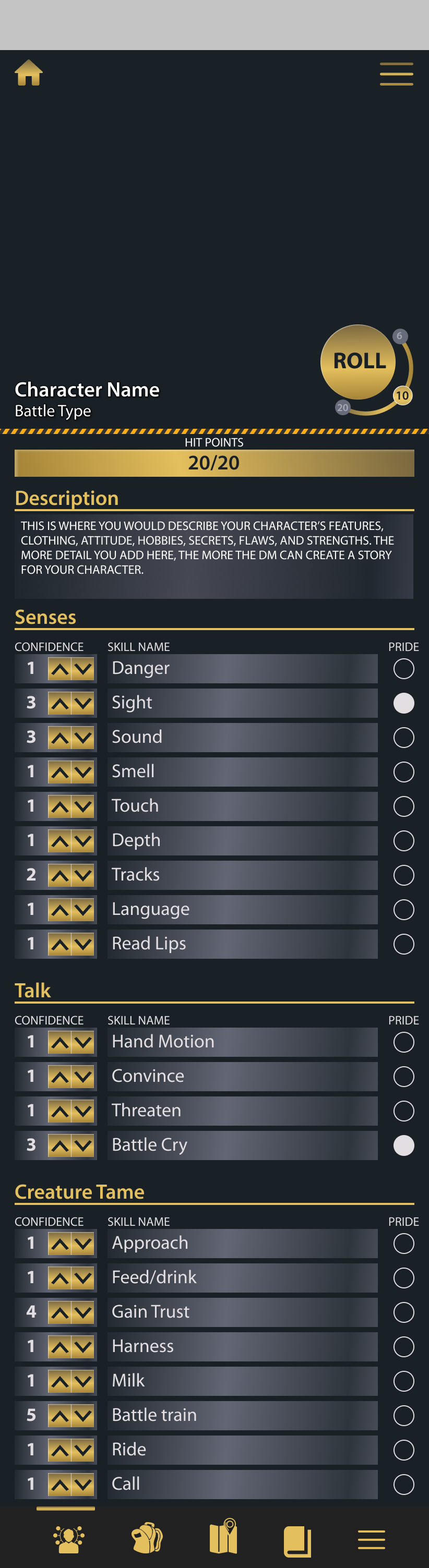
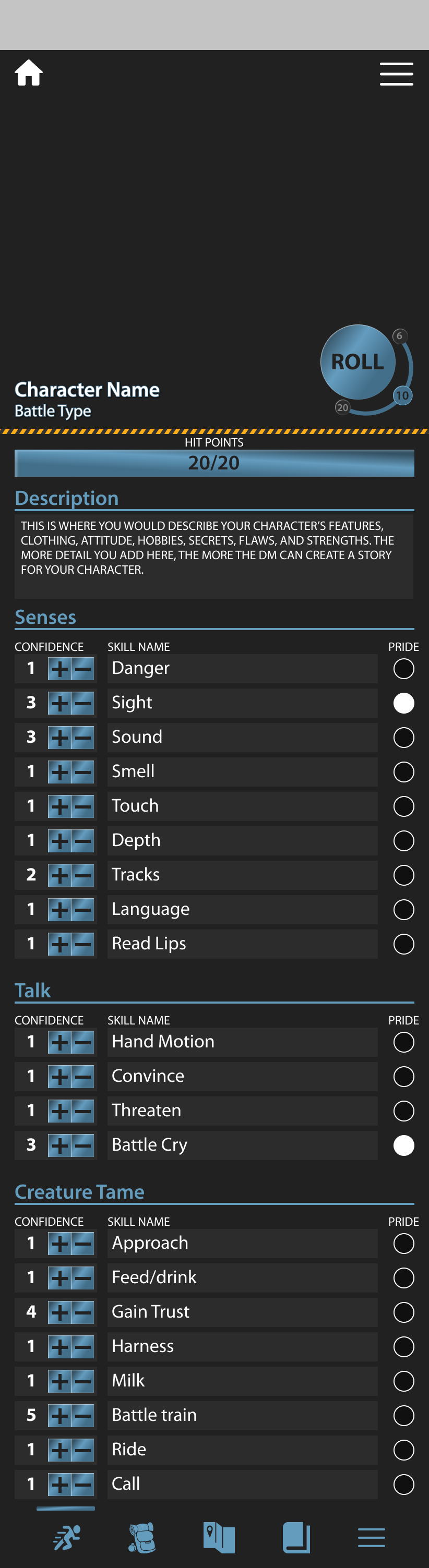
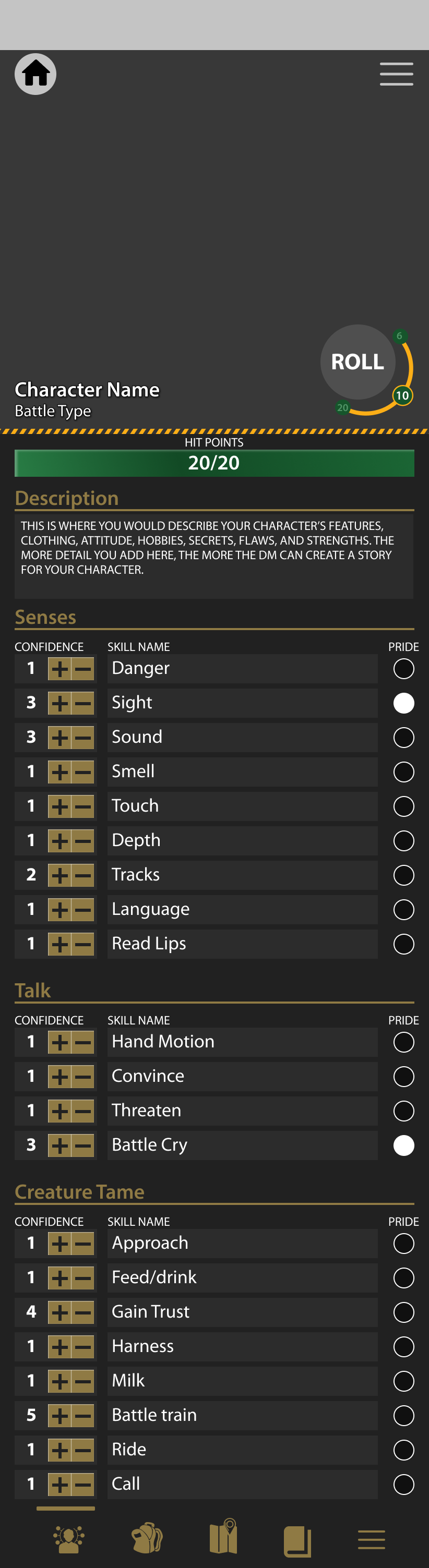
Based on competitive research, I made some color options, and an option for changing the number stat to the left of the skill. The leftmost option is a type-in field, where the others are buttons.
Character sheet setup time averaged 6 minutes. Competition can take 5 plus hours.
Scenario game time averaged 45-minutes to 1 hour. Competition can take 6 hours.
Average use of D20 die was 95% of the time, 5% for D10 die. Competition varies greatly depending on character builds.
All tests used generic maps designed for D&D, and were modified in less than 30 minutes for Fidelity.
Children are excited about characters because they aren't limited to rulebooks, races, and professions.
Skeptical testers were satisfied with the simplicity of the rules, and were able to involve themselves in the story more, to point they were excited about running their own game.
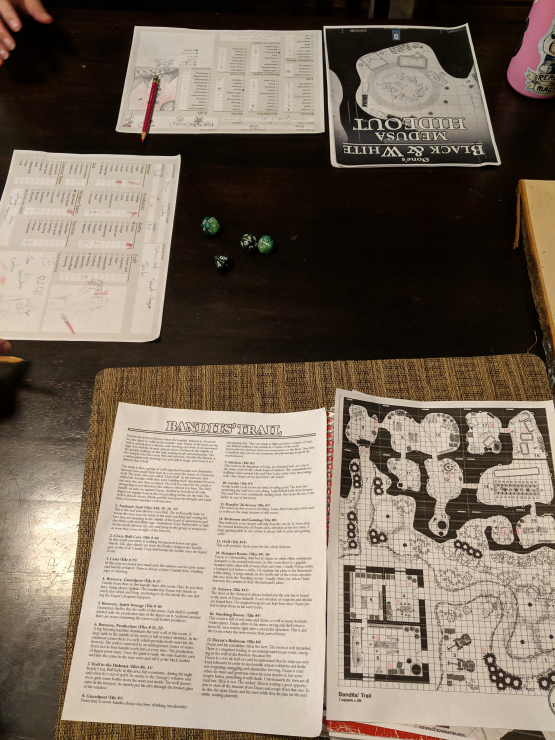
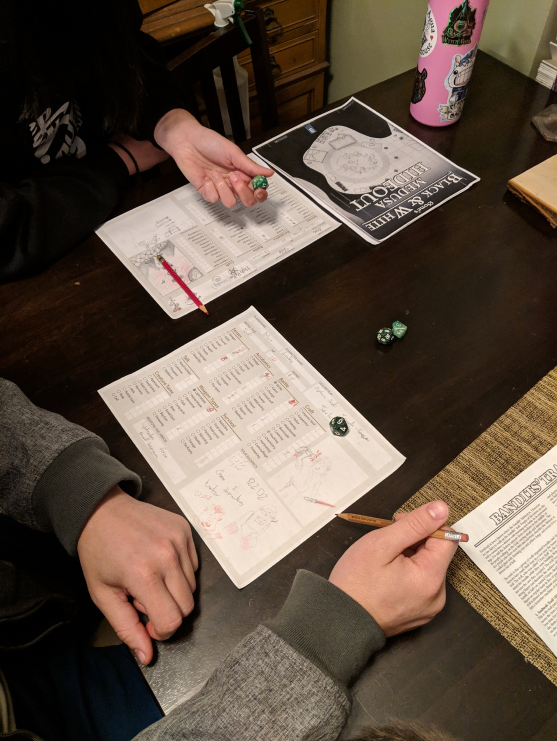
Left: GM map and room descriptions, using a map designed for D&D but redeveloped the monsters to have Success Points instead of Hit Points and modified the theme to be Star Wars Universe. Goblins became Pig Guards, Orcs became stormtroopers, and troll stayed a troll.
Right: Character sheets filled out in less than 6 minutes including time spent for graphics. Players built Luke and Leia (Skywalker) on a mission to help Leia's jedi training. GM gave Luke R2 as a supporting character who has pride in hacking, but is known to trip up on stairs. Don't leave him behind.
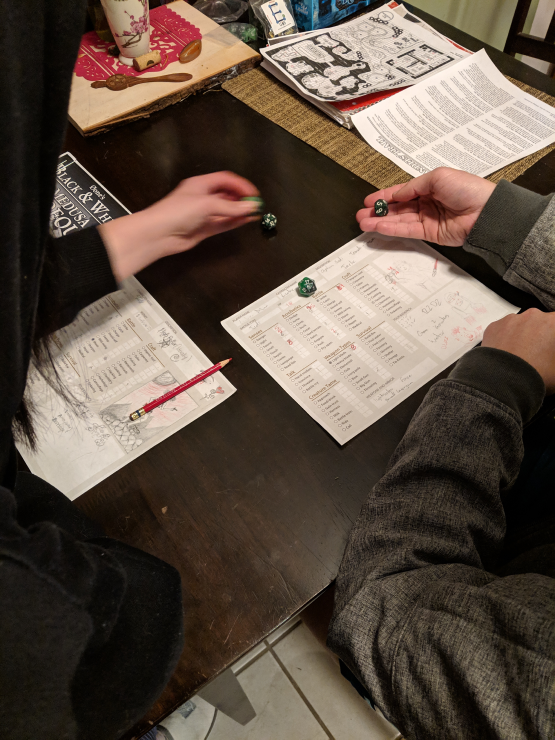
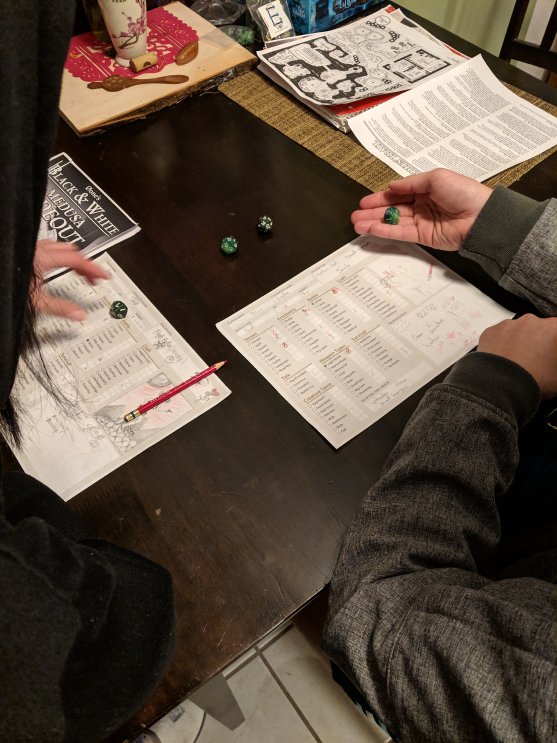
Left: Player 1 rolling a D20 for dodging and a D10 for pride in shooting her blaster. If she didn't have pride in shooting, she would only roll one D20, making the dice to roll much easier to remember. This is the most complicated roll in the game.
Right: Player 2 rolling a D20 after he failed at a roll to see if he learned from his mistake. A successful roll this time will still fail his skill check, but he will gain a point in the skill regardless, making every roll a chance to build a stronger character and increase micro-satisfaction and reduce game drag.